Built for
the Cold.
Decoded for You.
A blog that traces the double helix back through snowdrift and sled trail — mapping every zinc deficiency, every wooly coat gene, every exercise-induced collapse marker hiding in a Husky's bloodline.
From Sled Trail
to Sequencer
Each card is an era or a discovery. Click to unspooling the lineage — every answer surfaces a deeper question.
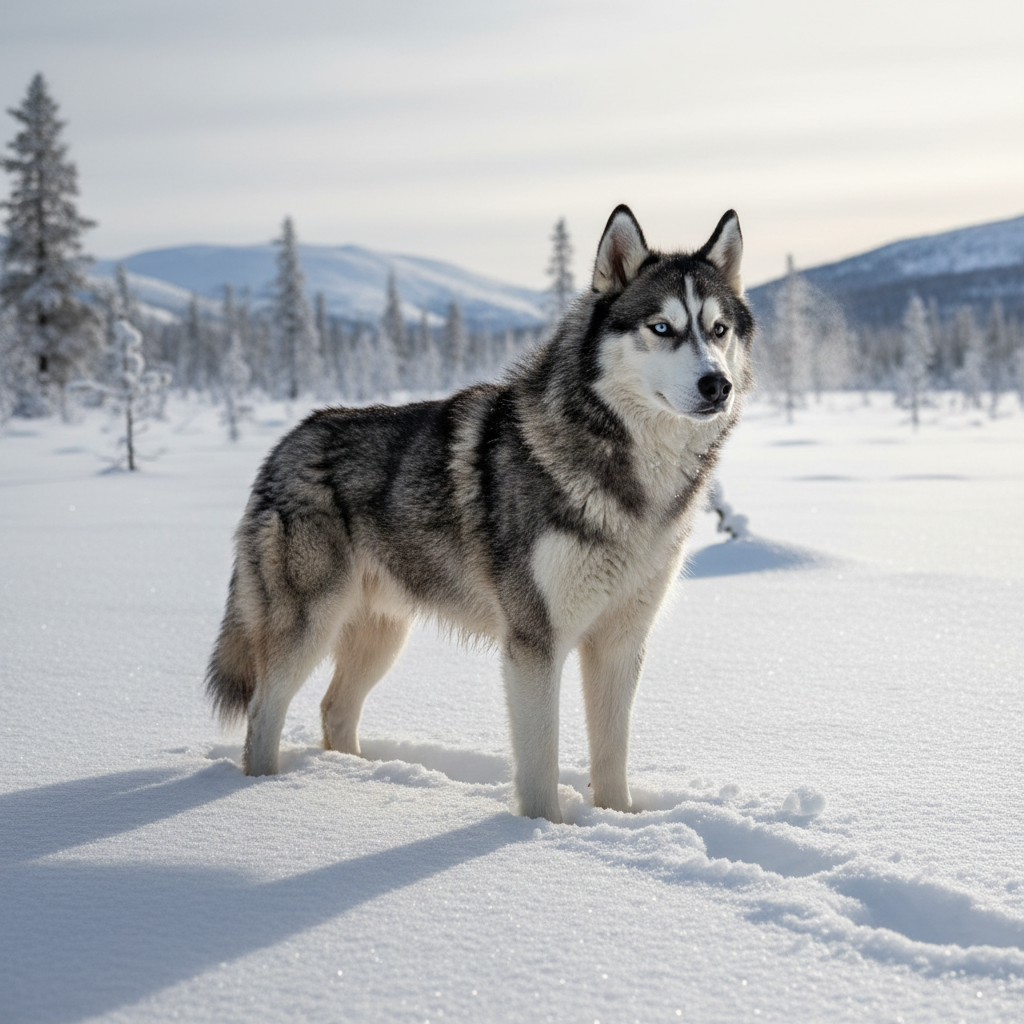
The Chukchi Origin
Wolf ancestry & founding bottleneck
The Husky carries one of the highest percentages of ancient wolf ancestry among domestic breeds — a genetic signature of the Chukchi people's selective pressure across 4,000 years of Arctic survival.
mtDNA haplogroup analysis places Siberian Huskies in a distinct clade with minimal post-domestication introgression, preserving ancestral metabolic pathways that enable fat-based endurance fueling at -60°F.
AMHR2 / EPAS1 variants
Ancient metabolic pathways mean Huskies process dietary fat differently than other breeds. High-carb kibble can disrupt this — a factor in zinc-responsive dermatosis rates.
COI in founding Chukchi lines: est. 6.25–12.5%. Modern show lines: up to 28%.
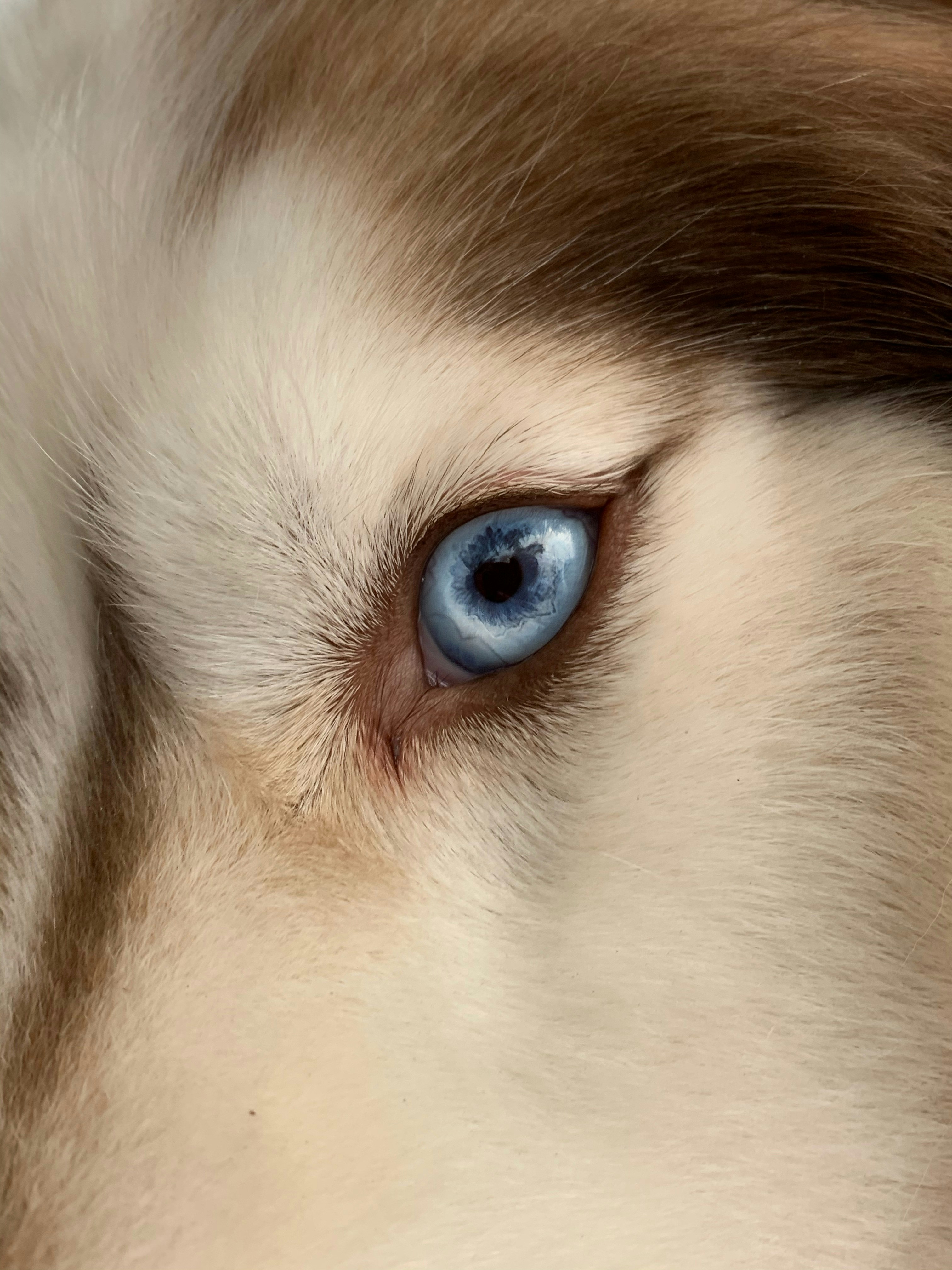
The ALX1 Blue Eye Variant
Why that gaze stops you cold
Blue eyes in Huskies aren't caused by the MITF gene like in other breeds. A duplication near ALX1 on chromosome 18 — found only in Huskies and Miniature Australian Shepherds — creates the depigmentation independently.
The ALX1 duplication reduces retinal pigment epithelium melanin without affecting iris structure. This is why Husky blue eyes remain sharp and clear — not washed out — and why heterochromia (bi-eyed or parti-eyed) occurs in ~40% of the breed.
Chr18 duplication — ALX1 locus
No association with hearing loss (unlike MITF-linked blue eyes in Dalmatians). However, parti-eyed Huskies should still receive BAER testing given the breed's independent deafness loci.
Homozygous duplication does not intensify blue — the trait is not dose-dependent.
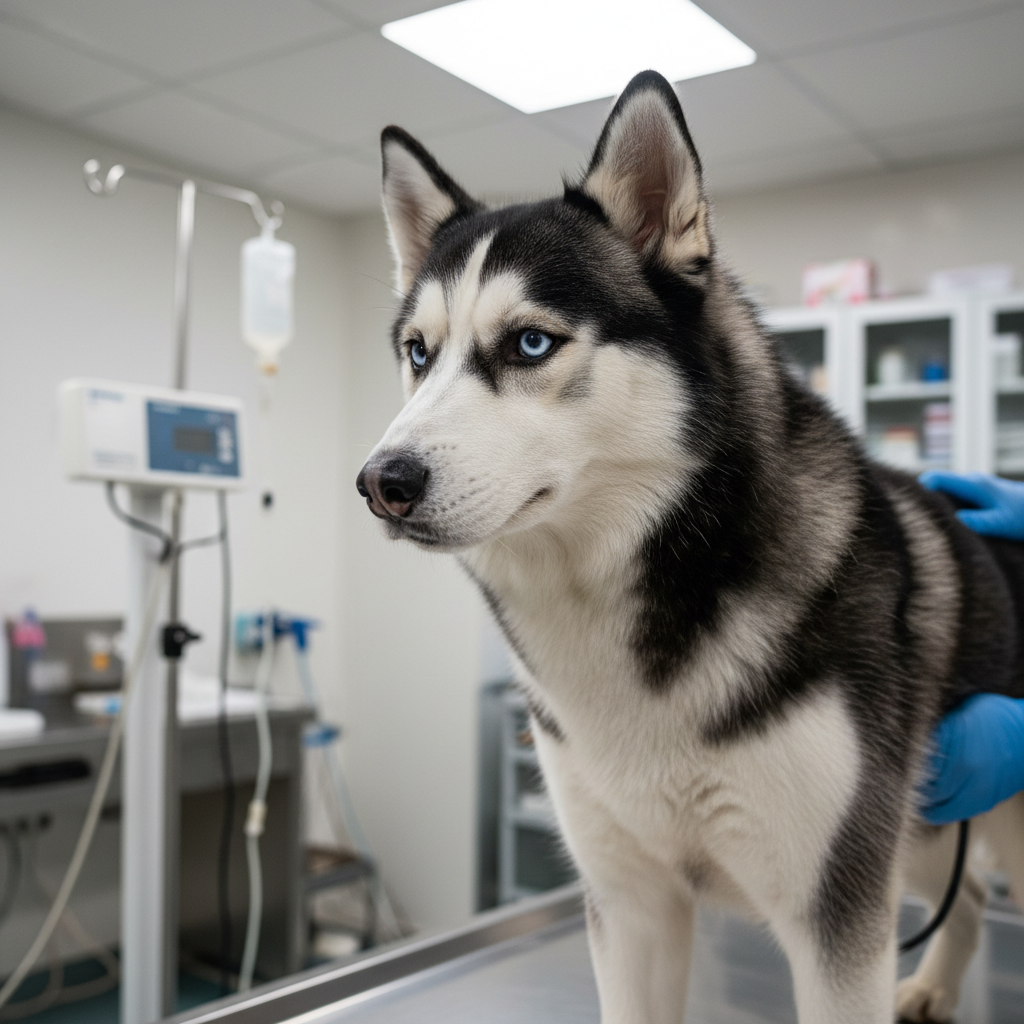
Copper Storage Disease
COMMD1 and the liver's silent accumulation
The COMMD1 deletion that causes copper toxicosis in Bedlington Terriers is absent in Huskies — but Huskies carry their own copper-handling variants that create breed-specific hepatic copper accumulation patterns.
Husky hepatic copper levels at post-mortem average 800–1,200 ppm dry weight versus the normal canine 200–400 ppm range. The mechanism is distinct from COMMD1 — likely involving ATP7A/ATP7B transporter variants — and rarely progresses to clinical toxicosis, but complicates interpretation of liver panels.
ATP7B / MURR1 pathway variants
Routine liver panels in Huskies frequently show mildly elevated ALT without clinical disease. Vets should interpret copper-related enzymes against breed-specific reference ranges, not generic canine normals.
Zinc supplementation protocols used in copper toxicosis management can trigger zinc-responsive dermatosis in Huskies — a breed-specific interaction requiring careful dosing.
Ready to go deeper?
The full genome is waiting.
78 illustrated articles. Pedigree analysis tools. Breed-specific drug sensitivity tables. Cited, updated, trusted by 2,400+ mushers.
No form. No friction. One click.
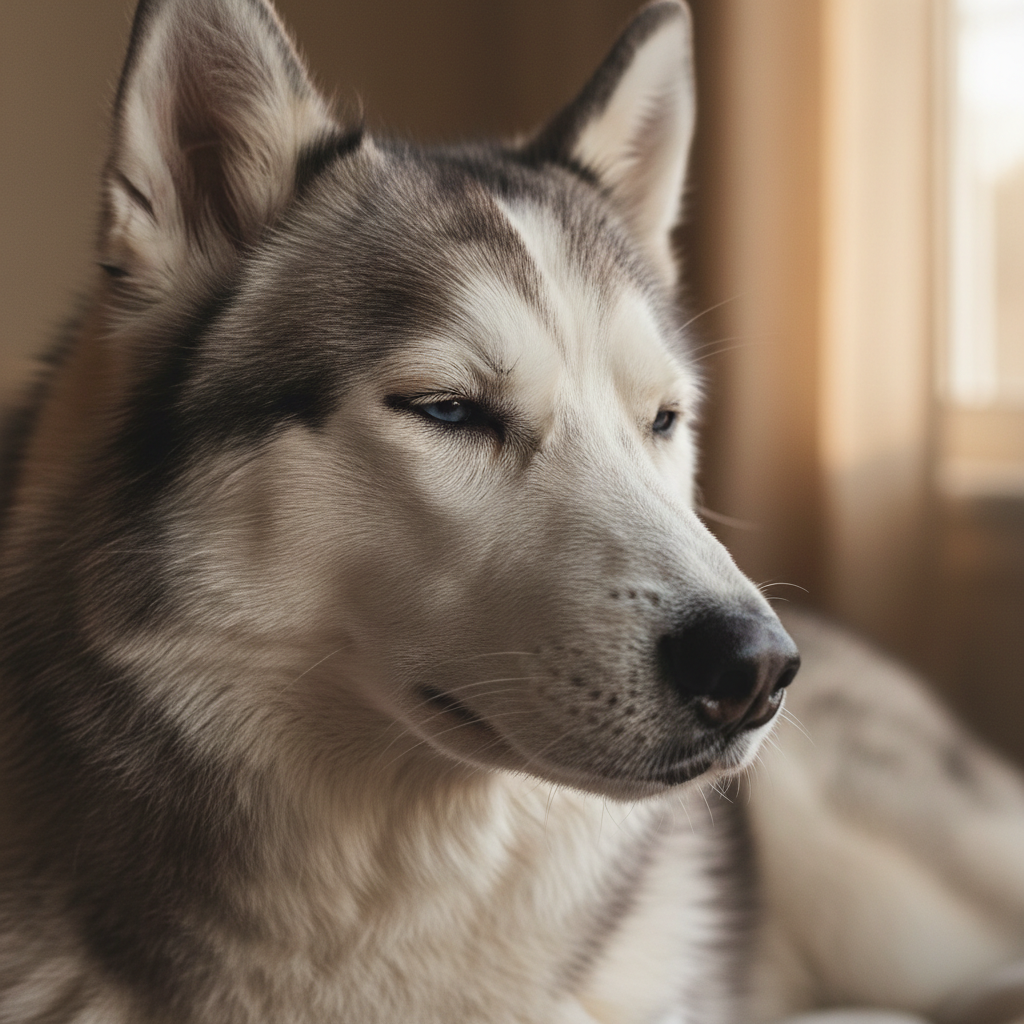
Zinc-Responsive Dermatosis
Syndrome I: the absorption gap
Huskies and Malamutes are the only breeds with Syndrome I zinc-responsive dermatosis — a genetic impairment in zinc absorption from the gut that produces scaling, crusting, and coat degradation even on zinc-adequate diets.
The defect is in intestinal zinc transporter expression (likely ZIP4 or ZnT5 variants), not dietary zinc content. Affected dogs cannot absorb sufficient zinc from food regardless of supplementation unless bioavailability is optimized. Clinical signs: symmetric crusting at mucocutaneous junctions, paw pad hyperkeratosis, dull coat.
SLC39A4 (ZIP4) — candidate locus
Diagnosis is clinical + dietary trial, not serum zinc (serum levels are unreliable). Treatment: zinc methionine 2–3 mg/kg/day long-term. Phytate-rich grain-based diets worsen absorption. Do not use zinc sulfate — poor bioavailability.
First-time owners: if your Husky has crusty skin around the nose, eyes, or paws — this is the first thing to rule out. It's treatable.
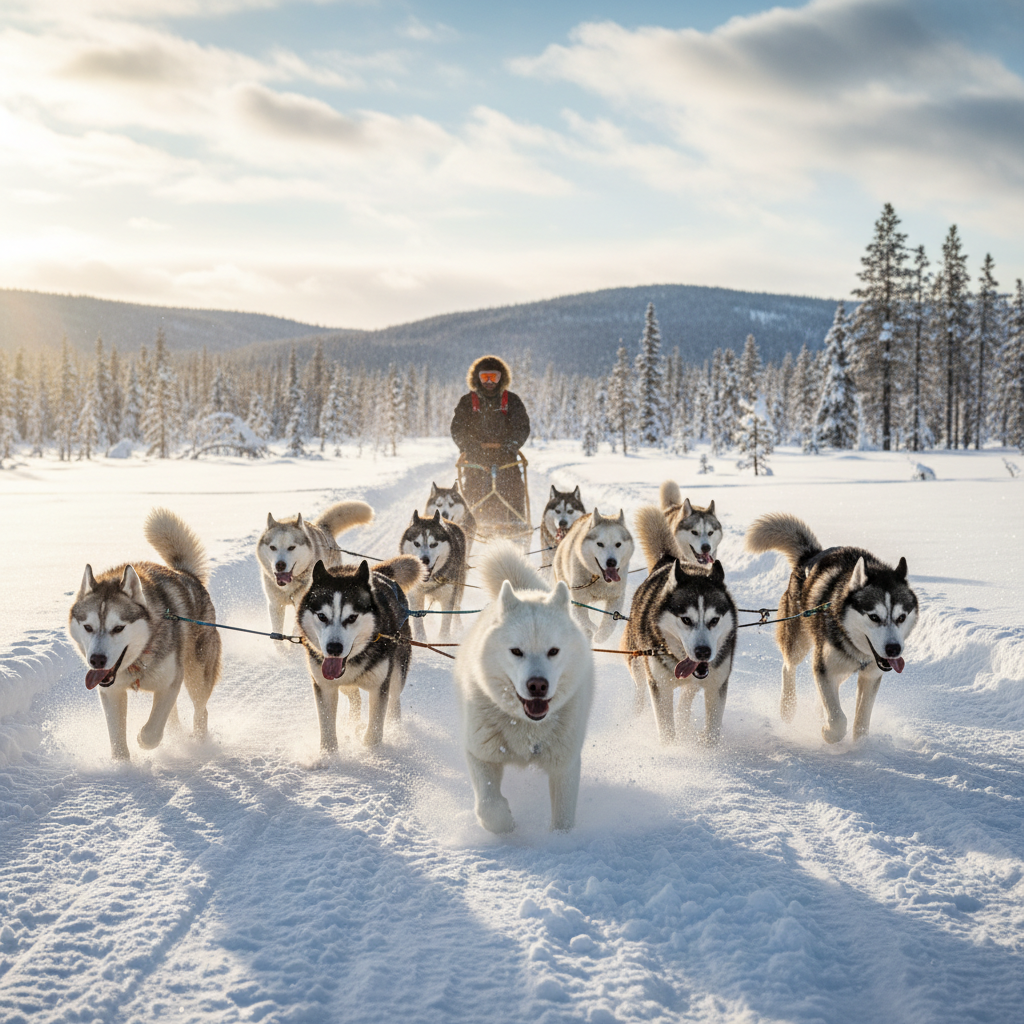
Exercise-Induced Collapse
DNM1 variants in working lines
While EIC (Exercise-Induced Collapse) is most studied in Labrador Retrievers via DNM1, Huskies in high-intensity sled racing show a distinct collapse phenotype — likely involving separate thermoregulatory and metabolic loci — that remains genetically uncharacterized.
Husky working-line collapse episodes differ from Labrador EIC: onset is typically 20–45 minutes into sustained effort (not explosive sprint), core temperature elevation is modest, and recovery is rapid (5–10 min). Musculoskeletal weakness pattern suggests mitochondrial or glycogen storage involvement rather than DNM1 pathway.
Uncharacterized — MTND5 / GYS1 candidates
Mushers: track collapse incidents by ambient temperature, pace, and pre-run feeding. Fasted runs significantly increase risk. Post-collapse CBC and chemistry panel — pay attention to CPK and lactate. Genetic testing panels for Labrador EIC are NOT informative for this phenotype.
COI above 18% in working lines correlates with increased collapse incidence in preliminary kennel surveys — not yet peer-reviewed.
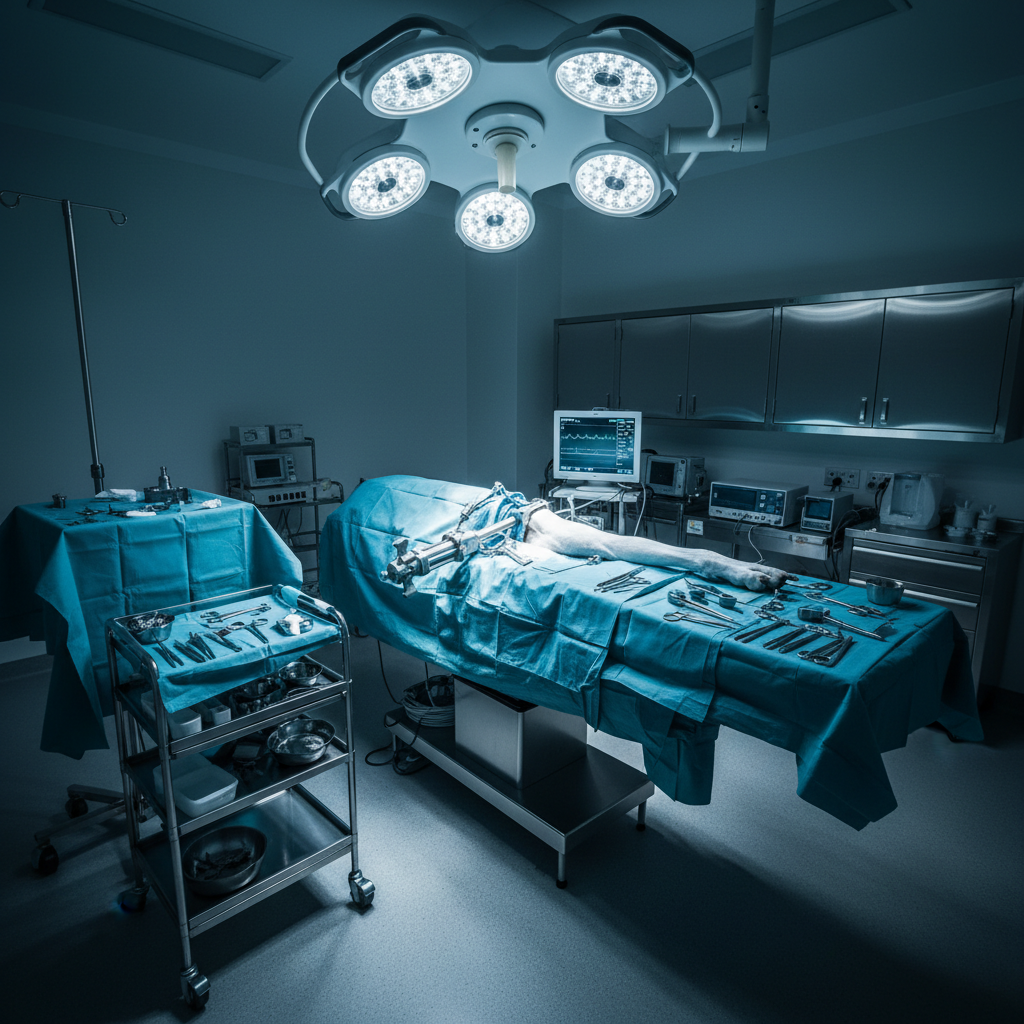
The FHO Debate
Femoral head ostectomy vs. conservative management
Hip dysplasia in Huskies presents differently than in heavy breeds — lighter body mass and extraordinary musculature create a genuine debate about whether surgical intervention improves outcomes over physical rehabilitation alone.
Huskies' unique muscle-to-weight ratio means the pseudoarthrosis that forms post-FHO is often highly functional. Multiple retrospective studies show 85–92% "good to excellent" outcomes in Huskies under 25kg — comparable to THR outcomes but at a fraction of the cost and surgical risk.
FBN2 / COL11A2 — hip dysplasia susceptibility
If your Husky has been diagnosed with hip dysplasia and surgery is being discussed: ask specifically about post-FHO outcomes in Huskies versus the breed data being cited. Generic canine hip dysplasia literature is dominated by German Shepherds and Labradors — different biomechanical reality.
Conservative management success rate in Huskies under 20kg with mild-moderate dysplasia: 70–78% avoid surgery with structured hydrotherapy + controlled exercise.
Reading a Husky
Coefficient of Inbreeding
COI measures the probability that both alleles at any locus are identical by descent. In Huskies, working-line COI under 6.25% correlates with optimal immune function and exercise tolerance. Show-line averages have drifted to 18–28%.
What the research
actually says
COI & Immune Function
Every 10% increase in COI correlates with a 5–7% reduction in litter immune response breadth (measured by vaccine titer variation). Huskies above 18% COI show measurably narrower MHC diversity.
Zinc Absorption & Diet
Grain-based diets with phytate content above 12g/kg significantly inhibit zinc bioavailability in Huskies with Syndrome I predisposition. Supplementing zinc sulfate in these dogs is clinically ineffective — only zinc methionine achieves therapeutic tissue levels.
Blue Eye Inheritance
The ALX1 duplication is autosomal with incomplete dominance. One copy produces blue eyes in ~80% of carriers; two copies do not intensify the phenotype. Parti-eyed and bi-eyed patterns are independent of zygosity.
FHO Outcomes in Light Breeds
92% of Huskies under 22kg showed "good to excellent" limb function 12 months post-FHO with structured rehabilitation. The pseudoarthrosis formed is biomechanically stable due to extraordinary epaxial muscle mass.
Mushers, vets,
and first-timers
"I've been tracking COI percentages across my breeding pairs for eight years. Howl is the first resource that treats musher-level genetic literacy as the baseline, not the exception. The COMMD1 breakdown alone saved me from a copper supplementation protocol that would have hurt two of my lead dogs."
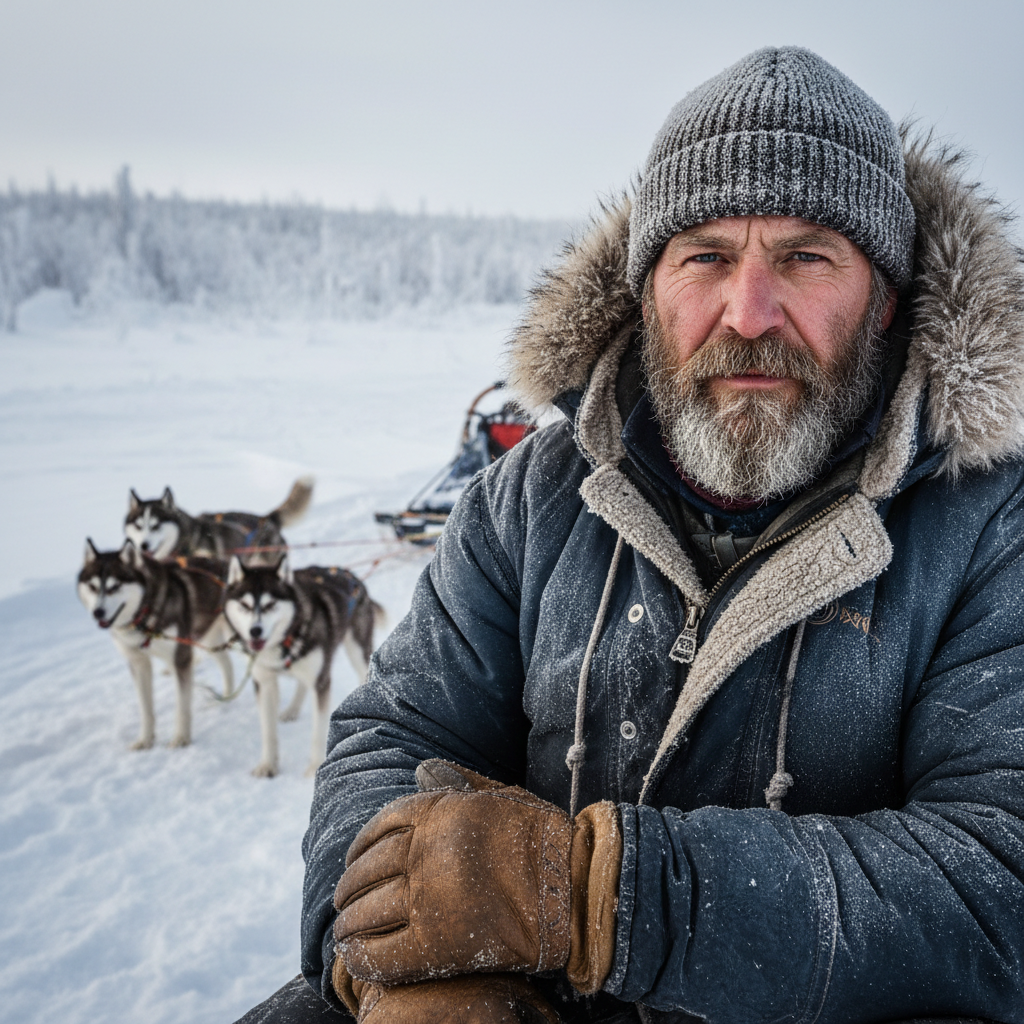
"I'm a vet tech at a mixed practice in Anchorage. When a Husky comes in with crusty skin around the nose, I used to wait for the vet to call it. Now I pull up Howl's zinc-responsive dermatosis protocol on my phone and we have a breed-specific treatment plan before the doctor walks in. The cited sources mean I can defend every recommendation."

"My first Husky, Koda, was digging up my entire yard and I was convinced he was broken. Howl's article on ancestral denning behavior explained it as an ancient thermoregulation instinct — not anxiety, not boredom. I stopped trying to fix it and started giving him appropriate outlets. He's calmer than he's ever been."

The double helix
runs deeper
From ancient Chukchi sled lines to modern CRISPR diagnostics — the complete Howl genome guide traces every gene, every surgery debate, every zinc deficiency hiding in your dog's bloodline.
For when worry brought you here